Read the fiber type
Common labels may list inulin, soluble corn fiber, polydextrose or other fibers. Check the actual ingredient list and how many grams are provided in a serving; the word prebiotic alone does not tell you the dose.
Start gradually
A sudden increase in fiber may cause bloating or digestive discomfort. Increasing fiber gradually and drinking adequate fluids may help. People with medical digestive conditions should seek individualized advice.
Compare gummies, psyllium and food
Beans, oats, fruit, vegetables and whole grains provide fiber alongside other nutrients. Psyllium has different physical properties and uses than some prebiotic fibers; compare the actual label and purpose.
Velq's development target
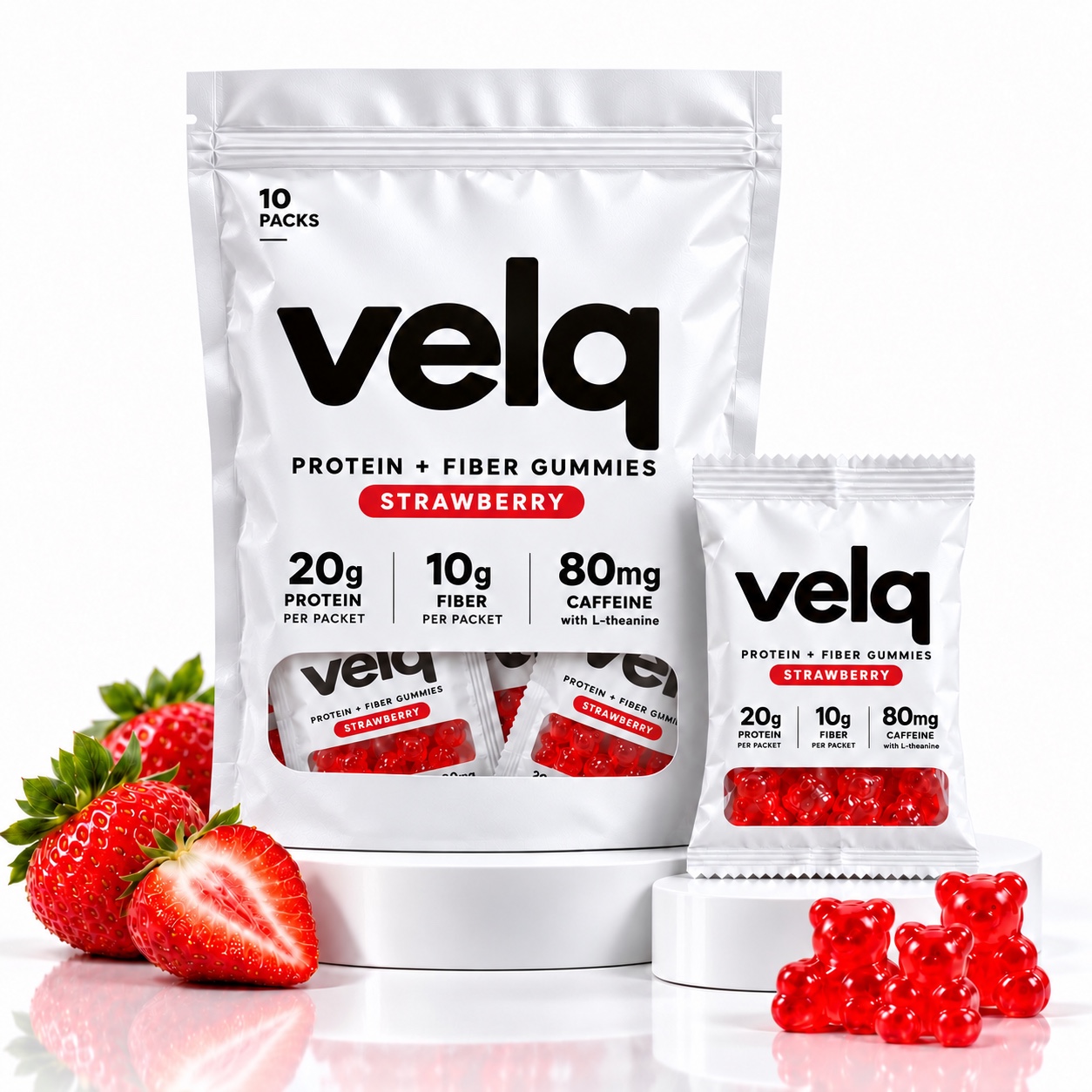
Velq is developing a strawberry gummy format targeting 10g prebiotic fiber per packet, alongside protein and caffeine. This amount is not a finalized product claim; review the final label before use.
Compare fiber labels side by side
Start with the grams of dietary fiber in one complete serving, then note the named fiber ingredients, serving size, added sugars, sweeteners, allergens and cost. A “prebiotic” label does not tell you how many grams of fiber a serving contains or how it may feel for you. Compare the nutrition panel and ingredients together.
| Label detail | What to check |
|---|---|
| Fiber grams | Use the complete serving, including the number of gummies required. |
| Fiber source | Identify the specific ingredient, such as inulin or psyllium, rather than relying on broad claims. |
| Serving instructions | Check whether the product calls for water or gradual introduction. |
| Sugars and other ingredients | Review the full panel; “gummy” does not mean sugar-free. |
| Price | Divide the package price by the number of complete servings. |
Gummies, powders and food serve different needs
Beans, lentils, oats, fruit, vegetables and whole grains provide fiber in meals alongside other nutrients. Powders may offer a different fiber type or serving size, while gummies can be more portable. Compare the ingredient, dose, texture, preparation, serving directions and total cost. A larger gram number alone does not establish that one product is right for everyone.
Make changes thoughtfully
Some people experience gas or bloating when they increase fiber quickly. NIDDK advises adding fiber gradually and drinking liquids to help fiber work better. Follow product directions and consider advice from a healthcare professional if you have digestive symptoms, a medical condition, or take medicines that may interact with supplements.
Velq is developing a gummy packet with a 10g prebiotic-fiber target alongside protein and caffeine. This is not a finalized label or a recommendation to use a particular dose. The formula and directions may change before launch.
Questions to ask before choosing
- What does one complete serving provide?
- Is the full ingredient and nutrition label available?
- What is the cost per serving?
- Does the product contain caffeine or ingredients I need to avoid?
- Are the claims supported by verified final packaging?
Why the kind of fiber matters
Look for the ingredient name rather than just “prebiotic fiber.” Inulin, psyllium, soluble corn fiber and other ingredients can differ in how they behave and how people tolerate them. A product with 4 g of one fiber is not automatically interchangeable with a product containing 4 g of another. Only make comparisons using the complete labeled serving, and check for additional ingredients such as caffeine or sugar alcohols.
For more on fiber and fluids, see the NIH NIDDK guidance on eating, diet and nutrition, which recommends adding fiber gradually and drinking liquids.
Compare cost and serving size without guessing
A fictional bottle priced at $18 with 12 full labeled servings costs $1.50 per serving. If each serving lists 3 g fiber, the price per listed fiber gram is $0.50. Use this only as a cost calculation: it does not measure the fiber's individual effect or suitability. Review the fiber ingredient, directions, total diet and tolerance before deciding.
Download the editable fiber-gummy comparison worksheet (CSV) and record full serving sizes, fiber sources, sugar, caffeine and manufacturer source links.
Editorial source notes and disclosure
Updated October 14, 2026. This is an educational label-reading guide prepared by Velq Editorial from public nutrition guidance, not an independent product test or individualized medical recommendation. Velq is developing a competing gummy product, and the stated prelaunch nutrient targets are not yet a verified final label.
Read our psyllium comparison or the FDA explanation of serving sizes and nutrition labels.
Fiber gummies vs. fiber powder
If you are choosing between ready-to-eat gummies and fiber powder, the format alone does not tell you which is appropriate. Our fiber powder versus gummies label comparison covers named fiber ingredients, complete servings, preparation directions, and price. Compare the current labels before making a decision.
Explore related comparisons
Protein and fiber gummy buying guide · Protein gummies with fiber comparison · Fiber gummies vs psyllium
Get Velq launch updates
Velq is still in development. Join the waitlist for the final label, availability and launch news. No payment today.