
Educational nutrition information, not an individualized diet or training prescription.
Publisher disclosure: Velq sells no product through this article today and is developing its own gummy product. This is brand-published educational content, not an independent product review.
A portion is what you choose to eat
NIDDK distinguishes your portion from the serving size printed on a package. A label helps you understand the food, but its serving size is not a personalized instruction. Your needs depend on factors such as body size, activity, and health. [1]
This matters when building muscle: following the smallest serving on every package may leave you underfed, while copying someone else’s large meal can overshoot your needs. Use a meal template as a starting point and personalize it.
Build a plate you can reproduce
| Meal component | Visual planning cue | Example |
|---|---|---|
| Protein food | A visible main portion; a palm can be a rough reference | Chicken, fish, tofu, tempeh, eggs, or yogurt |
| Carbohydrate food | A cupped-hand reference or a familiar bowl portion | Rice, potatoes, oats, pasta, or bread |
| Vegetables or fruit | A fist-sized reference or a familiar side dish | Cooked vegetables, salad, berries, or an apple |
| Fat-containing food | A small, deliberate addition | Olive oil, nuts, seeds, avocado, or nut butter |
Hand cues are approximate visual reminders, not precise nutrient measurements or universal serving prescriptions. Food density, preparation, and your hand size vary. If you need exact protein grams, check a label or weigh a few familiar portions once to calibrate your eye.
Three examples using the same framework
- Breakfast: yogurt, oats, berries, and nuts. Adjust the yogurt and oat amounts to fit your appetite and goals.
- Lunch: tofu or chicken, rice, vegetables, and a sauce you enjoy. Keep the ingredients consistent while you learn which portions work.
- Dinner: fish or beans with potatoes, cooked vegetables, and olive oil. Add a planned snack if the gap between meals is long.
The point is repeatability, not a perfect-looking plate. Use the bowl, container, or plate you already own so you can notice meaningful changes in quantity.
Make one adjustment at a time
Choose a review period, such as the next two or three weeks. Note training performance, recovery, hunger, and—if appropriate for you—body-weight trends. Day-to-day weight shifts are not a reliable measure of new muscle.
If you are repeatedly hungry and your routine suggests you are not eating enough, one possible experiment is adding a familiar carbohydrate portion or a planned snack. If you feel uncomfortably full, consider spreading food across more eating occasions. A sports dietitian can help identify whether your overall intake needs to rise, fall, or simply become more consistent.
Avoid changing breakfast, dinner, snacks, supplements, and training simultaneously. A single change is easier to assess and maintain.
Keep protein quality and training in the picture
Protein foods are useful because of their amino acids, but extra food alone does not guarantee muscle growth. The NIH exercise nutrition fact sheet places protein within a broader adequate diet and exercise context. [2]
Pair your meal plan with an appropriate strength program and adequate recovery. If you need highly precise intake for sport, have a medical condition, or struggle with eating patterns, seek individual guidance rather than relying only on visual estimates.
Plan the moments that usually go wrong
Look at your calendar for missed lunches, long commutes, and late workouts. Solve one recurring gap: keep a shelf-stable backup at work or prepare tomorrow’s lunch while making dinner. A predictable snack is useful when it supports the day rather than replacing meals by accident.
Read the food-first muscle guide and portable protein and fiber snack ideas for options.
Frequently asked questions
Can hand portions tell me exact calories?
No. They are rough visual cues. Labels, reliable databases, and measured portions are better when precision matters.
Should everyone eat larger portions to gain muscle?
No. Appropriate intake depends on your starting point, training, health, and goals.
How do I know whether to adjust?
Review consistent trends in training, recovery, appetite, and suitable body measurements. Seek individual advice when progress is unclear.
Sources and further reading
A visual meal checklist
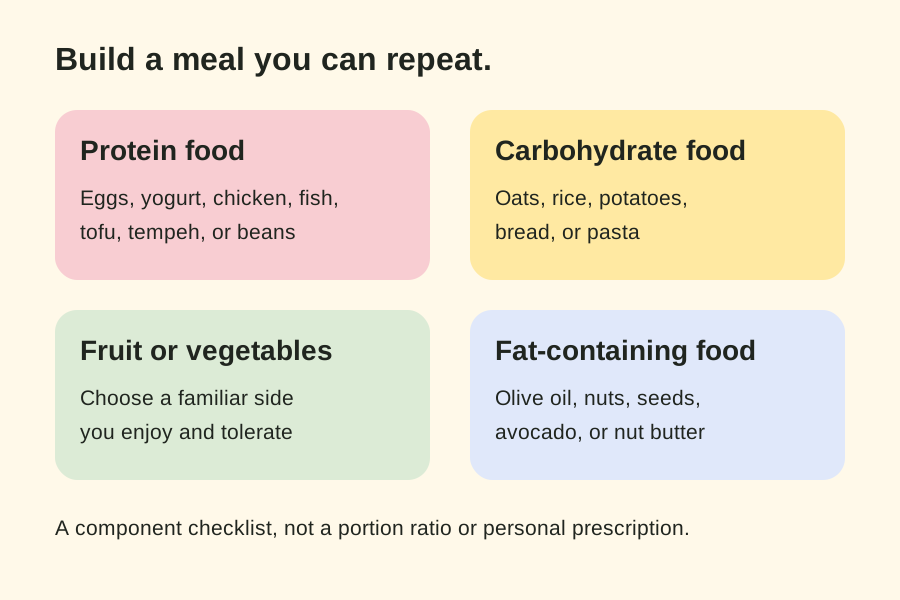
Use this checklist to make meals repeatable. The four equal boxes do not prescribe equal portions. Download the meal checklist.
A practical worksheet to use next
Open the free nutrition planning workbook: compare label values and costs, plan meal portions, or prepare questions for your care team. It works without an email signup and can be printed.
How this article was prepared
Published by Velq Editorial, the brand’s editorial byline. Read our sourcing, AI-assistance, and correction policy. This article is educational and has not been independently clinically reviewed.